

29 Oct A2® short-stem implant and Ana.Nova® hybrid acetabular cup: 2.5% probability of failure within nine years
A2® Short Stem and Ana.Nova® Hybrid Cup: 2.5% Probability of Failure Within Nine Years
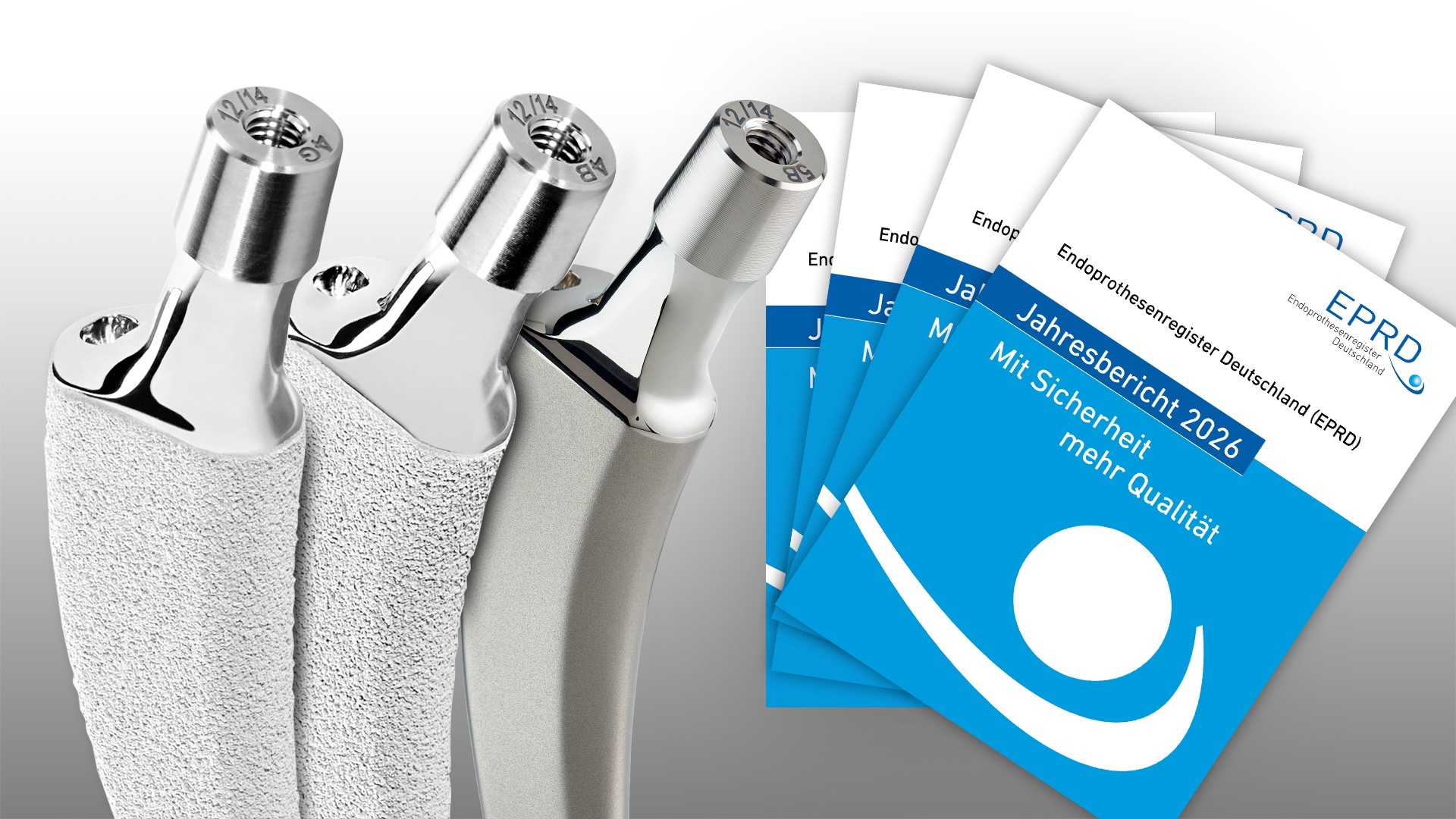
EPRD 2026
Examining the differences in outcomes between the various stem systems makes the continued rise in the use of short stems for primary total hip arthroplasty (THA) easy to understand. While standard, cementless stems show an average failure probability of 5.4% over an 11-year period, the figure for cementless short stems is only 3.7% over the same timeframe.
The cementless A2® short stem was first implanted in 2016 and is now in its ninth year of follow-up. With 19,853 procedures performed, it has become one of the most frequently used primary hip stem systems in Germany within this short period. A total of 121 hospitals now utilize the system, relying on its exceptionally low failure probability—just 3.4% over nine years. By comparison, the group of standard stems shows a failure probability of 4.8% over the same period. The results are even better when the system is combined with the Ana.Nova® hybrid acetabular cup—a component established for 20 years—where the failure probability across 9,036 recorded procedures is only 2.5% over nine years.
In this anniversary year for the A2® short-stem implant, we were particularly looking forward to the annual report from the Endoprosthesis Register Germany (EPRD). Now in its ninth year of follow-up, this cementless short-stem option continues to hold a leading position in elective hip arthroplasty. The share of procedures utilizing short-stem implants rose further in 2025, reaching 23.7% of all primary hip replacement surgeries.